Wednesday, March 23, 2022

Date Range Picker In Angular 8

#L3-#L6 at these lines mat-date-range-input is an angular material component for date range selection. This component renders with 2 input fields inside of it. These 2 input fields used to capture date range selection values like start and end dates. These 2 input fields decorated with directives like matStartDate and matEndDate to respond for date picker selection. #L7 at this line mat-datepicker-toggle is an angular material component represents calendar icon inside the input field and on clicking this icon calendar will toggle. To appear this icon to the rightmost side of the input filed needs to use thematSuffix directive.

date range picker in angular 8 - L3-L6 at these lines mat-date-range-input is an angular material component for date range selection

Mat-datepicker-toggle also configure with directive which has the value of template variable(in our example myPicker is template variable of mat-date-range-picker). The Ignite UI for Angular Date Range Picker Component displays a month-view calendar that lets the end-user select a date range by defining its start and end date. The calendar's UI is shown either in a dropdown or as a dialog upon user interaction with the calendar icon that is part of the input field.

date range picker in angular 8 - This component renders with 2 input fields inside of it

In addition, the component provides an advanced setup option, exposing two separate editable input fields. The component supports locales and custom date formatting. So, what to do if we must have that "Last 7 Days" button, but want to use Material's date range picker?

date range picker in angular 8 - These 2 input fields used to capture date range selection values like start and end dates

Of course, we could add an additional menu button to our form field, that opens yet another overlay to choose the preset. But this would not be very intuitive for users that are used to pickers with custom range selection (and probably would look like... not very well). We want to integrate this directly into the picker component itself.

date range picker in angular 8 - These 2 input fields decorated with directives like matStartDate and matEndDate to respond for date picker selection

Set this to true if you want to apply the disabled attribute to the input element that renders the selected range of the DatePicker component. #L8 at this line mat-date-range-picker is an angular material component that shows a calendar popup with a date range selection feature. Datepicker can be validated using matDatepickerFilter property of Datepicker input. The matDatepickerFilter accepts a function that returns Boolean. For true value date is valid and for false value date is invalid.

date range picker in angular 8 - L7 at this line mat-datepicker-toggle is an angular material component represents calendar icon inside the input field and on clicking this icon calendar will toggle

The calendar will disable invalid dates and cannot be selected. But for manual entry of invalid date, we can display error message using its matDatepickerFilter error. Mat-date-range-input is an Angular Material Component for the date range selection.

date range picker in angular 8 - To appear this icon to the rightmost side of the input filed needs to use thematSuffix directive

This component requires to input fields to capture the start date and end date that are selected from mat-date-rang-picker. Mat-date-range-picker is an Angular Material Component for date range selection. Mat-date-range-picker component is shown popup calendar like mat-datepicker component but allows multi-date selection option. As you can see, the Material date picker is implemented, using an input field, and a calender popup.

date range picker in angular 8 - Mat-datepicker-toggle also configure with directive which has the value of template variablein our example myPicker is template variable of mat-date-range-picker

We use the matDatepicker property on the input element to connect it to the mat-datepicker directive using a template reference variable (#picker). The basic functionality works like a charm, but what about custom preset ranges? It's a common use case to have pre-defined ranges like "last month" or "this week" which can be selected to set the date range. There are a couple of libraries out there, e.g. ngx-daterangepicker-material, that provide this functionality. Unfortunately, the Angular Material date range picker does not.

date range picker in angular 8 - The Ignite UI for Angular Date Range Picker Component displays a month-view calendar that lets the end-user select a date range by defining its start and end date

If we want to select multiple types of dates, we can use the mat-date-range-input and mat-date-range-picker components. They operate in tandem, similarly to mat-datepicker and required date picker input. Now to add material date picker with date range selection to it, then we need to add material components as below. In this tutorial, you will learn how to use angular material to integrate date range picker in angular 11/12. Use the multiple month view of the date picker for building an availability calendar for a vacation rental. The colored backgrounds and labels can be used to display season and pricing information and half-day styling to show check-in and check-out dates.
date range picker in angular 8 - The calendar

In this example we will simply install angular Material design and we will use MatDatepickerModule, MatNativeDateModule, MatFormFieldModule and ReactiveFormsModule import class. Using those class we will simple create angular material date range picker with input. You can disable angular material date range input using disabled property.

date range picker in angular 8 - In addition

Otherwise it will open to the month or year containing today's date. This behavior can be overridden by using the startAt property of mat-date-range-picker. In this case the calendar will open to the month or year containing the startAt date. Now we'll see how to setup angular material date range picker component.

date range picker in angular 8 - The component supports locales and custom date formatting

Use the dateFormat, timeFormat options to customize how the values show up in the inputs after selection. If the formats are not expicitly set, they are inherited from the localization settings. This quick and comprehensive tutorial helps you understand how to integrate the date range using an angular material package in an angular application from scratch. The matDatepickerFilter property of Input accepts a function which returns true or false for a date in calendar popup.

date range picker in angular 8 - So

If it returns false for a date it will be shown a disabled for selection. We use a Material card component with class mat-elevation-z3 to match the date picker style. Inside ot it, we add a button for each customPresets item.

date range picker in angular 8 - Of course

When the user clicks on the button, selectRange is called with the item as argument. We can use this two errors to display validation error messages on mat-datepicker input element. This article will give you example of angular material date range picker. I explained simply about angular date range picker example. If you have question about how to use date range picker in angular then i will give simple example with solution. Follow bellow tutorial step of date range picker in angular material.

date range picker in angular 8 - But this would not be very intuitive for users that are used to pickers with custom range selection and probably would look like

The startView property of mat-date-range-picker can be used to set the view that will show up when the calendar first opens. It can be set to month, year, or multi-year; by default it will open to month view. In this section you will find informations about required modules and available inputs, outputs, methods and events of date picker component. To install it, we need to install Angular in our project, and once you have it, you can enter the command below and download it. Let's write a sample example to use this date range selection date picker in angular reactive forms implementation.

date range picker in angular 8 - We want to integrate this directly into the picker component itself

In this tutorial will guide you on how to integrate angular material for show date range picker in angular 11/12 app. Angular Datepicker is a built-in material component that allows us to enter the date through text input or by choosing the date from a calendar. Angular Material Datepicker allows users to enter the date through text input or by choosing the date from the calendar. The Material Datepicker comprises several components and directives that work together. Luckily you can use the cellCssClass property of the colors option to pass a CSS class that will be added to the day cell and apply any custom styling you write in CSS.

date range picker in angular 8 - Set this to true if you want to apply the disabled attribute to the input element that renders the selected range of the DatePicker component

These days can be recurring days, ranges or individual days. By default these options are empty and the date picker supports infinite navigation, while the time picker has all 24 hours/60 minutes/... Values can be passed as JS date objects, ISO date strings or Moment.js objects. You can highlight days, mark them with colored dots, add labels or completely color the background of the days using the marked, colors and labels options. This offers means to add more information to the calendar that could be valuable to users. While you can use the colors along with marked and labels, the latter two are mutually exclusive because they get rendered in the same place on the UI.

date range picker in angular 8 - L8 at this line mat-date-range-picker is an angular material component that shows a calendar popup with a date range selection feature

The range picker supports start & end selection for date, time and combined date & time. Choose between a calendar view with one or more months, week view with single or multiple weeks or date and time scrollers and dropdowns. In this Angular 13 date range picker tutorial, you will find out the simple way to implement date range picker in the angular app using the angular material library. First with the start and then with the end date of the period we calculated in calculateDateRange. This updates the selected values of the picker and its calendar. If we would inject the calendar and set the values there, the picker would'nt notive the changes.

date range picker in angular 8 - Datepicker can be validated using matDatepickerFilter property of Datepicker input

After this is done, we immediately close the picker, because it means that the user has made their choice. Import formatDate from @angular/common to change the datepicker input format. When a user manually type a date beyond min max range. The input element will have following validation errors. But user can able to type the dates manually in mat-datepicker input element. Now we will learn how to enforce min max validations to mat-datepicker input using an example.

date range picker in angular 8

After importing MatDatepickerModule in our component file, use mat-datepicker,mat-datepicker-toggle and input elements together to display datepicker calender pop up. Automatically sets the range value when both dates are selected and hides the calendars. If using a single calendar, the range is set and the calendar is closed when the date is selected. Here we need to create Angular 10 project, because angular material date range component is released from Angular v10. There are a lot of datepicker Libraries available for Angular. Angular Material is a UI component library that is developed by the Angular team to build design components for desktop and mobile web applications.

date range picker in angular 8 - For true value date is valid and for false value date is invalid

In order to install it, we need to have angular installed in our project, once you have it you can enter the below command and can download it. The matte-date-range-input component is used with form graph directive to sum the starting and end values from @angular/forms and validating it as a group. Disable recurring days, set marked or colored days with the help of the recurring object.

date range picker in angular 8 - The calendar will disable invalid dates and cannot be selected

Learn how to configure daily, weekly,monthly and yearly recurring dates and pass rule in the recurring property under the invalid, marked, colors or labels options. Exceptions for specific and recurring days can be configured. Besides customizing the date and time formats you can reorder the time picker wheels and change its formats with the timeWheels options. Invalids, min/max - you can do it in either format and the picker will automatically know what to do with it.

date range picker in angular 8 - But for manual entry of invalid date

If you want to specify how the picker should return values, you can do it in the returnFormat option. The capabilities like built-in validation, minimum, maximum values, disabled dates, range length are supported by both the scroller and calendar. In this article, you will learn how to add daterange picker in angular application.

date range picker in angular 8 - Mat-date-range-input is an Angular Material Component for the date range selection

First, open the app.component.ts file; at the top, import the FormControl and FormGroup module from '@angular/forms'. Also, define a dateRange form with start and end value in addition to FormControl API. Using min and max properties of Input field we can ser range of dates to make the selection available.

date range picker in angular 8 - This component requires to input fields to capture the start date and end date that are selected from mat-date-rang-picker

A user cannot move before minand move after a maxdate. Material Datepicker consists of two things, an input field, and a calender popup.The matDatepicker property is used to connect these two with a template variable (#picker). We can disable the datepicker by adding disabled property to the input element. And if the user manually types the date which is a weekend, the input element will have matDatepickerFilter validation error. To implement date picker in Angular we can use angular material datepicker module called MatDatepickerModule. The Date Range Picker Component supports all directives from the core FormsModule, NgModel and ReactiveFormsModule (FormControl, FormGroup, etc.).
date range picker in angular 8 - Mat-date-range-picker is an Angular Material Component for date range selection

In addition, the component's min and max values also act as form validators. When the calendar is visible, a range can be selected by choosing the start and end dates. Picking a date will set the start and end date, until a second date is chosen. If there is a selected range, clicking any other date from the calendar will start a new range selection. Easily restrict users to select only a date range with specific minimum and maximum numbers of days by setting the min and max days options.

date range picker in angular 8 - Mat-date-range-picker component is shown popup calendar like mat-datepicker component but allows multi-date selection option

I needed to be able to use custom templating and reactive forms, which were the primary features of developing this module which were missing in the original project. You should create an input with attached datepicker directive and a button with "ngx-daterangepicker-action" class . For minimum and maximum date selection, use min and max property of Datepicker input text.

date range picker in angular 8 - As you can see

The basic and events of the input will only trigger the user's interaction with the input element; they are not fire when the user selects a date from the calendar popup. Let's create a sample application to implement the date range selection date picker. Not to forgot this sample example only works with Angular v10.

date range picker in angular 8 - We use the matDatepicker property on the input element to connect it to the mat-datepicker directive using a template reference variable picker

Therefore, a datepicker input also has support for and events — these triggers when a user interacts with either an input or the popup. The input's native and events will only trigger user interaction with the input element; they will not fire when the user selects the date from the calendar popup. The second way to add the date validation is by using the matDatepickerFilter property of the datepicker input. StartDate The beginning date of the initially selected date range. If you provide a string, it must match the date format string set in your locale setting. Angular material date picker extension to support range selection.

date range picker in angular 8 - The basic functionality works like a charm

Angular Material date picker can be used with the mat-datepicker or mat-date-range-picker directives in the component's template. For using the Material date picker, we first need to import the MatDatePicker module. ShowWeekNumbers is a boolean value which is true by default and displays the number of the week.

date range picker in angular 8 - It

Friday, January 21, 2022

When Do We Use To Before A Verb

The most common pronouns are the personal pronouns. These refer to the person or people speaking or writing , the person or people being spoken to , or other people or things . Several of the personal pronouns have singular and plural forms.

when do we use to before a verb - The most common pronouns are the personal pronouns

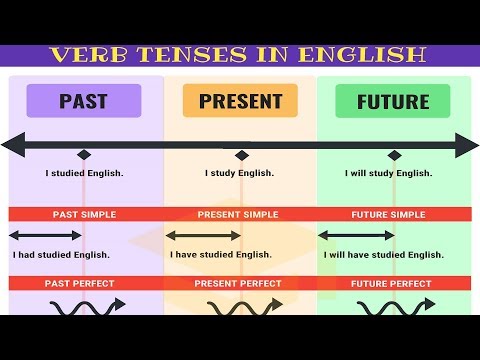
Like nouns, personal pronouns can function as either the subject of a verb or the object of a verb or preposition. Most of the personal pronouns have different subject and object forms. Future perfect continuous tense functions just like the future perfect tense, except with an ongoing action. Both, however, are frequently used with expressions of time. The past participle is used for the perfect tenses.

when do we use to before a verb - These refer to the person or people speaking or writing

In regular verbs, it's the same as the simple past tense, so there's nothing extra to learn. However, irregular verbs often use unique past participles, so you may have to memorize their forms. The parts of the sentence are a set of terms for describing how people construct sentences from smaller pieces.

when do we use to before a verb - Several of the personal pronouns have singular and plural forms

Like the parts of speech, however, the parts of the sentence form part of the basic vocabulary of grammar, and it is important that you take some time to learn and understand them. Adverbs and adverbial phrases that modify the verb typically come after the subject but before the verb, although other positions are sometimes possible; see Adverbs and adverbials. For constructions that involve more than one verb or verb phrase in sequence, see Serial verb constructions. For sentences consisting of more than one clause, see Conjunctions.

when do we use to before a verb - Like nouns

We must choose carefully among these various forms when selecting the proper verb to go with our subject. Singular subjects require singular verbs; plural subjects require plural verbs. We wouldn't write "The troops was moving to the border." But some sentences require closer attention. Past perfect continuous tense is used in complex and compound sentences to show which event happened first.

when do we use to before a verb - Most of the personal pronouns have different subject and object forms

While the past perfect tense describes an individual action, the past perfect continuous shows an ongoing action that is already finished. The first potential problem to avoid is mixing up infinitive phrases with prepositional phrases. Remember that an infinitive phrase is the word 'to' followed by a verb. Chinese frequently uses serial verb constructions, which involve two or more verbs or verb phrases in sequence.

when do we use to before a verb - Future perfect continuous tense functions just like the future perfect tense

Chinese prepositions behave similarly to serialized verbs in some respects, and they are often referred to as coverbs. There are also location markers, which are placed after a noun and so are often called postpositions; they are often used in combination with a coverb. Predicate adjectives are normally used without a copular verb ("to be") and so can be regarded as a type of verb. The basic word order is subject–verb–object , as in English. Otherwise, Chinese is chiefly a head-final language, meaning that modifiers precede the words that they modify.

when do we use to before a verb - Both

In a noun phrase, for example, the head noun comes last, and all modifiers, including relative clauses, come in front of it. This phenomenon is more typically found in subject–object–verb languages, such as Turkish and Japanese. Being— Being is the present participle of the verb to be.

when do we use to before a verb - The past participle is used for the perfect tenses

You will mainly see it in continuous tenses and as a subject in sentences ("Being a polyglot is a great asset."). Even a casual review of your writing can reveal uses of the verb "To be" that are unnecessary and that can be removed to good effect. In a way, the "To be" verb doesn't do much for you — it just sits there — and text that is too heavily sprinkled with "To be" verbs can feel sodden, static. This is especially true of "To be" verbs tucked into dependent clauses and expletive constructions ("There is," "There were," "it is," etc.).

when do we use to before a verb - In regular verbs

Note that the relative pronoun frequently disappears as well when we revise these sentences. When do you use "finishing" versus "to finish" versus "finished"? One of the more complicated tenses in English, the perfect continuous tense combines the perfect and continuous tenses at the same time. It's largely used like the perfect tense, but with ongoing or continuous actions. Future perfect tense refers to an unfinished event from a future when it's already completed. By Sunday, you'll be finished riding your bike.

when do we use to before a verb - However

You can say, "My bike ride will have finished by Sunday." That's why the future perfect tense is usually used with an expression of time, for context. In English grammar, "inflection" is the broad umbrella term for changing a word to suit its grammatical context. You've probably never heard this word before, but you actually do it all the time without even thinking about it.

when do we use to before a verb - The parts of the sentence are a set of terms for describing how people construct sentences from smaller pieces

When Do You Use To Before A Verb Pronouns and nouns change form depending on whether they are the subject (i.e., the actor) or the direct or indirect object (i.e., the thing being acted upon) of a sentence. Adjectives and adverbs, it's said, were invented for those who don't know enough verbs. Take the sentence "Paris seduces," for example.

When Do You Use To Before A Verb

You could just as easily say, "Paris is seductive," but the use of the verb "to be" makes the sentence less active and alive. The predicate explains the action of the sentence. The simple predicate refers to just the verb or verb phrase, linked to the subject, which tells what action is being performed by that subject.

when do we use to before a verb - Adverbs and adverbial phrases that modify the verb typically come after the subject but before the verb

In the examples above, "crossed," "works," and "is" are all simple predicates. It is a sentence of present tense because of the main verb 'has' being in its present tense form and a perfect aspect because it contains 'have + Vp.p' structure. The Situation Time is in the past because John has done the action of buying a house. However, the Topic Time is present because unlike 'John bought a house', this sentence focuses on the current effect of completing the action of buying a house. Therefore, present time is the speaker's focus and so Topic Time is present.

when do we use to before a verb - For constructions that involve more than one verb or verb phrase in sequence

Therefore, we can see that the position of three times being Situation Time precedes Topic Time which coincides the Utterance Time. Since tense is in charge of the relationship between Topic Time and Utterance Time, the sentence is of present tense. However, since aspect is in charge of the relationship between Situation Time and Topic Time and that Situation Time precedes Topic Time, this sentence has perfect aspect. It can be seen that tense and aspect are in charge of different relationships.

when do we use to before a verb - For sentences consisting of more than one clause

This is emphasized to help distinguishing these two concepts. The simple present tense describes actions, events or conditions happening in the present, at the moment of speaking or writing. The simple present is used when the precise beginning or ending of the action, event or condition is unknown or unimportant to the meaning of the sentence.

when do we use to before a verb - We must choose carefully among these various forms when selecting the proper verb to go with our subject

Almost all verbs have two important forms called participles. Participles are forms that are used to create several verb tenses ; they can also be used as adjectives. So what's the difference between infinitives and gerunds? Often, they are interchangeable—both infinitives and gerunds can act as subjects and direct objects.

when do we use to before a verb - Singular subjects require singular verbs plural subjects require plural verbs

Auxiliary verbs, or "helping verbs," are used in English to change another verb's tense, voice, or mood. When auxiliary verbs are used, there's always a main verb that represents the main action. However, the auxiliary verb must still be conjugated correctly. 'Monica wanted to score five goals in the soccer game.' In this sentence, 'to score' acts as a direct object. Remember that direct objects are nouns; they can answer the question 'who' or 'what' and receive the action of the subject. Using 'to' before a verb in a sentence is known as Infinitive Verb Form.

when do we use to before a verb - We wouldn

Discover examples of how Infinitives can be used to transform verbs into nouns, adjectives, and adverbs, and carefully avoid phrasing mishaps. We could easily turn independent clauses into complete sentences by adding appropriate punctuation marks. We might say, "I despise individuals of low character." Or we might write, "Helen loves Canadian geese!

when do we use to before a verb - Past perfect continuous tense is used in complex and compound sentences to show which event happened first

" We call them independent because these types of clauses can stand by themselves, without any extra words attached, and be complete sentences. Chinese makes frequent use of serial verb constructions, or verb stacking, where two or more verbs or verb phrases are concatenated together. Example Explanation Bridget will have been studying Greek for three years by the end of this term. The future perfect progressive tense indicates the ongoing nature of the future act of studying, which will occur before the upcoming end of term. By the time the meeting is over, the selection committee will have been arguing about which candidate to interview for three hours. The ongoing nature of the future act of arguing is emphasized by the use of the future perfect progressive.

when do we use to before a verb - While the past perfect tense describes an individual action

The act of sustained arguing will take place before the meeting is over. When Miguel returns, the wine will have been fermenting for three months. Here the ongoing action of fermentation will precede the act of returning. The present perfect tense describes actions that began in the past and continue into the present or that have just been completed at the moment of speaking or writing.

when do we use to before a verb - The first potential problem to avoid is mixing up infinitive phrases with prepositional phrases

The present perfect often suggests that a past action still has an effect upon something happening in the present. This one trips up a lot of people as it can't be checked by ear, like the examples above. Though this is a common colloquial phrase, it is not grammatically correct. In this sentence, "was" is a form of the verb to be that sets up a predicate nominative, so the writer should use "I," which is in the nominative case.

when do we use to before a verb - Remember that an infinitive phrase is the word

Another way to use was is as an auxiliary verb with a singular subject in the past continuous tense. Present perfect continuous tense describes an ongoing action started in the past that continues to the present. If that sounds familiar, it's because that's one of the situations we use the normal present perfect tense, too. A direct object is the person or thing that the action happens to, while an indirect object is the person or thing that receives the direct object. To use the word "only" correctly, place it directly before or after the noun, subject, or verb to make the meaning clear.

when do we use to before a verb - Chinese frequently uses serial verb constructions

Write a short story of at least 250 words about a time you were surprised. In your writing, include at least three infinitive verbs. At least one infinitive verb should function as a noun; at least one should function as an adjective, and at least one should function as an adverb. Underline each infinitive verb you include and indicate its part of speech above the infinitive. From this solid base, you can begin adding your objects and clauses to create more complex sentences.

when do we use to before a verb - Chinese prepositions behave similarly to serialized verbs in some respects

The future perfect progressive indicates continuing actions that will be completed at some specified time in the future. The future perfect tense refers to actions that will be completed sometime in the future before another action takes place. The past progressive tense describes actions ongoing in the past, which generally took place within a specific time frame. The ongoing actions took place and were completed at some point well before the time of speaking or writing. The simple past tense describes actions, events or conditions that occurred in the past, before the moment of speaking or writing. Like the present perfect, the present perfect progressive tense describes actions, events or conditions that began in the past and continue in the present.

when do we use to before a verb - There are also location markers

The present perfect progressive, however, stresses the ongoing nature of the action, condition or event. And, when we use it in different tenses, we usually use it as a linking verb, particularly in continuous tenses or in the passive voice. The main rule which is relevant here is, again, that the subject precedes the predicate verb in all but a few well-defined types of clauses. However, there are a few cases in English where the order between subject and predicate verb is inverted, that is, when the predicate verb actually precedes the subject.

when do we use to before a verb - Predicate adjectives are normally used without a copular verb

Inversion is discussed in the sections below. Here "I" is used as a direct object-the person receiving the licks but "me" is the right word to use as a direct object. Again, try removing all other people after the verb except "I" and re-read the sentence to see if it sounds right (again, "The puppy licked I" does not sound right). In this sentence, there are two subjects "Jack and me," but me is the objective case. Most people can find the right word by ear this way. Sometimes both the "-ing" and the past participle ("-ed") forms can function as adjectives.

when do we use to before a verb - The basic word order is subjectverbobject

The "-ing" and the past participle is bolded in the example sentences below. Notice that the "-ing" adjective refers to a thing and the past participle ("-ed") adjective refers to a person. Simple present tense is used for actions that happen regularly or things that don't change, such as preferences or opinions. It's made with the root form, unless the subject is third-person singular , in which case you use the third-person singular present form. The sentences you provide are of a special type called Cleft sentences. They have two parts, connected with some form of be as a linking verb.

when do we use to before a verb - Otherwise

So it's optional, and you're right, it can be left on or taken out and it's OK either way. This means the modifier ("only") is not placed beside the noun or other word it is meant to modify. This can create confusion for the listener or reader, because the sentence becomes awkward, even misleading. The phrase 'to be' is acting as the subject of the sentence. It is as if the verb phrase puts on the costume of a noun, adjective or adverb and plays the role of a part of speech other than itself.

when do we use to before a verb - In a noun phrase

You already know that you need a subject and a verb to create a sentence. What you may not know is that these are the two most important parts of a sentence to get right. The more specific the noun, the more your reader will be able to picture what it is you're talking about ("schooner" is more specific than "boat," "Paris" more specific than "France"). Pronouns work well when the antecedent is clear. While repeating a noun can get ponderous, unidentifiable pronouns confuse the reader.

when do we use to before a verb - This phenomenon is more typically found in subjectobjectverb languages

Coldfusion - Javascript Image Conversion

CFML additionally consists of numerous other constructs together with ColdFusion Components , CFML's version of objects, that allow for ...